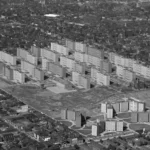
Crime PreventionCrime prevention refers to strategies, policies, and interventions aimed at reducing criminal behavior, victimization, and opportunities for crime before offenses occur. Through Environmental Design (CPTED) is an approach to crime prevention that emphasizes the design and management of built environments to reduce opportunities for crime and increase perceived safety. Rather than focusing primarily on offender rehabilitation or punitive deterrence, CPTED seeks to shape environments in ways that discourage criminal behavior while encouraging legitimate use of public spaces and strengthening informal social control.
CPTED assumes that criminal opportunities are influenced by environmental conditions. Through deliberate urban planning, architectural design, and space management, crime risks can be reduced before offenses occur. This makes CPTED one of the most influential applied approaches within environmental criminology and modern situational crime prevention.
Key Points
Crime Prevention Through Environmental Design (CPTED)
Main Proponents: C. Ray Jeffery, Tim Crowe
First Formulations: 1960s–1970s
Country of Origin: United States
Core Idea: CrimeActs or omissions that violate criminal laws and are punishable by the state. opportunities can be reduced through environmental design, urban planning, and the management of public spaces.
Related To / Foundation For:
- Situational Crime Prevention
- Defensible Space Theory
- Crime Pattern Theory
- Urban Crime PreventionStrategies to reduce crime in urban environments through design, policing, and social interventions.
- Environmental CriminologyA field studying how environments and spatial factors influence crime patterns.
Theory
CPTED emerged during the 1960s and 1970s as criminologists, architects, and urban planners increasingly recognized that the physical environment could shape crime patterns and perceptions of safety. The term was coined by C. Ray Jeffery in 1971, who argued that crime prevention should focus not only on offenders but also on the environments in which crime occurs.
The central assumption of CPTED is that criminal behavior is partly influenced by situational opportunities. Certain urban environments facilitate anonymity, weak guardianship, and low levels of informal social control, while others encourage visibility, collective responsibility, and legitimate use of space.
To reduce crime opportunities, CPTED relies on several key design principles:
- Natural SurveillanceSystematic monitoring of people’s activities, behaviors, or communications.: Spaces should maximize visibility and reduce concealed areas. Lighting, window placement, sightlines, and open design increase the likelihood that suspicious behavior will be observed.
- Territorial ReinforcementReinforcement refers to processes through which behavior becomes more or less likely depending on rewards, punishments, or social reactions.: Physical boundaries such as landscaping, signage, fences, or pavement design communicate ownership and distinguish between public, semi-public, and private spaces.
- Access Control: Entry and movement within spaces can be guided through gates, pathways, entrances, or architectural layouts that discourage unauthorized access.
- Maintenance and Management: Well-maintained spaces signal social order and active guardianship. Neglected environments may communicate weak social control and increase fear of crime.
- Activity Support: Legitimate activities and regular use of public areas increase informal surveillance and strengthen community presence.
CPTED therefore focuses less on changing offenders themselves and more on altering the environments in which criminal opportunities emerge. The approach is closely connected to Routine Activity Theory and Situational Crime Prevention, both of which emphasize opportunity structures and situational conditions of crime.
Second-Generation CPTED
Early CPTED approaches focused primarily on physical design. Over time, however, scholars argued that environmental design alone could not fully explain crime and safety. This led to the development of Second-Generation CPTED, which incorporates social and community-oriented dimensions.
Second-generation CPTED emphasizes:
- community participation in urban planning,
- collective efficacy and neighborhood cohesion,
- local stewardship of public spaces,
- trust between residents and institutions,
- social inclusion and legitimate public use.
This expanded perspective connects CPTED more closely to theories of social control, neighborhood effects, and urban sociology.

The wub, CC BY-SA 4.0, via Wikimedia Commons
Definition: Hostile architecture refers to design features intended to discourage certain behaviors in public spaces, such as sleeping, skateboarding, or loitering.
Examples: Anti-homeless benches, spikes on flat surfaces, segmented seating, or anti-skateboarding devices.
Criticism: Critics argue that hostile architecture often targets marginalized groups and displaces social problems rather than solving them. Instead of fostering inclusive public spaces, such measures may increase exclusion and social inequality.
Implications for Criminal Policy
CPTED has significantly influenced urban planning, architecture, and modern policing strategies. Rather than relying solely on reactive law enforcement, CPTED promotes preventive interventions that reduce opportunities for crime before offenses occur.
Examples include:
- improved lighting in parks and public transport areas,
- clear sightlines in pedestrian zones,
- controlled access systems in apartment buildings,
- crime prevention audits in urban redevelopment projects,
- public space management strategies that encourage legitimate use.
Many contemporary approaches to urban crime prevention, security planning, and public-space management incorporate CPTED principles. The approach is therefore widely used not only by criminologists but also by architects, planners, local governments, and private security professionals.
Critical Appraisal & Relevance
CPTED is widely regarded as one of the most practical and policy-oriented approaches within criminology. Its emphasis on prevention, environmental management, and situational intervention has contributed to measurable reductions in certain forms of property crime, vandalism, and fear of crime.
At the same time, critics argue that CPTED focuses heavily on situational conditions while paying less attention to broader structural causes of crime such as poverty, social inequality, exclusion, or discrimination. From this perspective, CPTED often explains how crime opportunities emerge in specific environments without fully addressing why social groups experience unequal exposure to crime, insecurity, or marginalization in the first place.
Urban Diversity versus Security Urbanism
Critics also point out that highly security-oriented urban design may conflict with classical sociological understandings of the city as a space of openness, diversity, anonymity, and social heterogeneity. Urban theorists such as Georg Simmel, Louis Wirth, and Jane Jacobs emphasized that cities thrive through density, difference, spontaneity, and informal interaction.
From this perspective, highly controlled urban environments risk producing standardized and consumption-oriented spaces in which unconventional or informal uses of public space become increasingly restricted. Critics therefore warn that CPTED strategies may contribute to the homogenization and “sterilization” of urban life.
Alternative urban aesthetics — such as graffiti, skate culture, independent businesses, student districts, or informal gathering places — may increasingly be interpreted less as expressions of urban diversity than as indicators of disorder requiring regulation and control.
CPTED and the Exclusion of Marginalized Groups
Critics argue that some CPTED strategies disproportionately affect groups perceived as “undesirable” in commercial or highly controlled urban spaces. These often include homeless people, drug users, street youth, skateboarders, sex workers, or individuals who do not participate in consumer-oriented urban life.
Measures such as hostile architecture, private security patrols, anti-loitering policies, “Mosquito” ultrasonic devices targeting teenagers, or the privatization of public spaces may reduce visible disorder while simultaneously excluding vulnerable populations from central urban areas.
From this perspective, CPTED does not merely prevent crime but also regulates acceptable behavior in public space by shaping who is considered welcome, visible, and legitimate within the urban environment.
Scholars such as Jeff Ferrell, Keith Hayward, Setha Low, and Stephen Graham argue that security-oriented urbanism can transform cities into increasingly regulated and consumption-oriented environments where deviance, informality, and social difference become less tolerated.
Nevertheless, CPTED remains highly influential in contemporary criminology and urban governance. Together with Crime Pattern Theory, Routine Activity Theory, and Defensible Space Theory, it forms a central part of modern environmental criminology and situational crime prevention.
Literature
- Armitage, R. (2013). Crime Prevention Through Housing Design: Policy and Practice. Basingstoke: Palgrave Macmillan.
- Cozens, P., Saville, G., & Hillier, D. (2005). „Crime Prevention Through Environmental Design (CPTED): A Review and Modern Bibliography“. Property Management, 23(5), 328–356.
- Crowe, T. D. (2000). Crime Prevention Through Environmental Design: Applications of Architectural Design and Space Management Concepts. Boston: Butterworth-Heinemann.
- Jacobs, J. (1961). The Death and Life of Great American Cities. New York, NY: Random House.
- Jeffery, C. R. (1971). Crime Prevention Through Environmental Design. Beverly Hills: Sage Publications.
- Simmel, G. (1903/1950). The metropolis and mental life. In K. H. Wolff (Ed. & Trans.), The Sociology of Georg Simmel (pp. 409–424). New York, NY: Free Press.
- Wirth, L. (1938). Urbanism as a way of life. American Journal of Sociology, 44(1), 1–24. https://doi.org/10.1086/217913