• Zur Hauptnavigation springen
  • Zum Inhalt springen
  • Zur Fußzeile springen

SozTheo

Sociology & Criminology for a Changing World

  • Sociology
    • Theories
    • Key Works in Sociology
    • Key Concepts in Sociology
  • Criminology
    • Key Works in Criminology
    • Key Concepts in Criminology
  • Theories of Crime
    • Classical and Rational Choice Theories of Crime
    • Biological Theories of Crime
    • Social Structure & Anomie
    • Learning and Career
    • Interactionist & Labeling
    • Critical, Marxist & Conflict Theories
    • Control Theories
    • Cultural & Emotional
    • Space & Surveillance
  • Key Thinkers
  • Glossary
Home » Surveillance

Surveillance

Historic aerial view of the Pruitt-Igoe housing project in St. Louis, illustrating large modernist apartment blocks associated with Oscar Newman’s Defensible Space Theory

Defensible Space Theory (Oscar Newman)

Defensible Space Theory is an influential approach within environmental criminology that argues architectural design and urban planning can significantly influence crime and social control. Developed by architect and urban planner Oscar Newman in the early 1970s, the theory proposes that residential environments can be designed in ways that encourage territoriality, natural surveillance, and collective responsibility,

continue …

Children’s TV Series as Agents of Socialization – Norms, Role Models, and Social Order

At first glance, children’s television appears harmless: colorful characters, simple narratives, clear conflicts. From a sociological perspective, however, children’s TV series are anything but trivial. They construct model worlds in which children learn what is considered “normal” – which family forms, occupations, conflicts, gender roles, and forms of authority are taken for granted. Children’s series

continue …

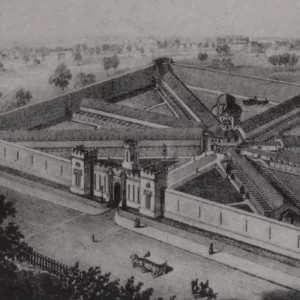
Prisons, Imprisonment and Alternatives

Prisons are among the most visible and contested institutions of modern societies. They represent the state’s ultimate power to deprive individuals of liberty, justified in the name of justice, order, and security. Yet the prison is not a timeless or natural institution: it emerged historically under specific social, political, and cultural conditions. In criminology and

continue …

Black and white photo of a police line tape with the words ‘Police Line Do Not Cross’, symbolizing authority, control, and social order.

Policing and Social Order

Policing does not simply mean the police. While the police are the most visible and influential agents of policing, the term refers more broadly to the diverse practices and institutions through which authority is exercised to maintain security, enforce laws, and regulate everyday life. Social order, in turn, describes the stability of social interactions, guided

continue …

Criminal Justice and Due Process

Criminal justice refers to the institutions, processes, and practices by which societies respond to crime, including policing, courts, and corrections. Due process, by contrast, is the principle that ensures the protection of individual rights and liberties against arbitrary state power. Together, they reflect one of the central tensions of modern legal systems: the balance between

continue …

Portrait: Bernard Harcourt

Bernard E. Harcourt – Against Prediction: Profiling, Policing, and Punishing in an Actuarial Age (2007)

Against Prediction: Profiling, Policing, and Punishing in an Actuarial Age (2007) is one of the key works by Bernard E. Harcourt and a foundational analysis of contemporary actuarial justice. Harcourt critiques the growing reliance on statistical risk assessment in criminal justice—particularly through police profiling, predictive policing, and risk-based sentencing. The book is a sharp critique

continue …

Seitennummerierung der Beiträge

1 2 3 4 Next »

Footer

About SozTheo

SozTheo is a personal academic project by Prof. Dr. Christian Wickert.

The content does not reflect the official views or curricula of HSPV NRW.

SozTheo.com offers clear, accessible introductions to sociology and criminology. Covering key theories, classic works, and essential concepts, it is designed for students, educators, and anyone curious about social science and crime. Discover easy-to-understand explanations and critical perspectives on the social world.

Looking for the German version? Visit soztheo.de

Legal

  • Impressum

Explore

  • Sociology
    • Key Works in Sociology
    • Key Concepts in Sociology
  • Criminology
    • Key Works in Criminology
    • Key Concepts in Criminology
  • Theories of Crime
  • Key Thinkers
  • Glossary

Meta

  • Anmelden
  • Feed der Einträge
  • Kommentar-Feed
  • WordPress.org

© 2026 · SozTheo · Admin