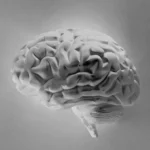
Biological theories of crime explain criminal behavior by reference to genetic, neurological, and physiological factors. These approaches focus on individual predispositions and biological processes that may increase the likelihood of offending.
In contrast to sociological theories that emphasize social structures and cultural norms, biological approaches highlight internal characteristics of the individual. Modern perspectives increasingly adopt a biosocial approach, integrating biological and environmental influences.
This perspective stands in contrast to approaches such as anomie theory or the labeling approach, which explain crime primarily through social structures and processes of social reaction.
This development has led to the emergence of biosocial criminology, which integrates insights from biology, psychology, and sociology.
Overview of Key Biological Theories of Crime
The following table provides a structured overview of the main biological theories of crime, highlighting their key assumptions, major proponents, and differences in explanatory focus.
| Approach | Main Proponents | Core Idea |
|---|---|---|
| Criminal Anthropology | Cesare Lombroso | Crime is biologically determined; “born criminals” show atavistic traits |
| Constitutional Theories | Kretschmer, Sheldon | Body types are linked to personality traits and criminal tendencies |
| Multiple Factor Approach | Glueck & Glueck | Crime results from the accumulation of multiple risk factors |
| Genetic & Neurological Approaches | Twin studies, neuroscience | Biological predispositions influence behavior (e.g. genes, brain structure) |
| Biosocial Theories | Moffitt | Crime results from interaction between biology and environment |
As the overview illustrates, biological theories of crime have evolved from early deterministic models toward more complex, integrative approaches that emphasize the interaction between biological predispositions and environmental influences.
Key Theories in Detail
The following key theories represent central approaches within biological criminology and are discussed in more detail in the linked articles.
Historical Development of Biological Criminology
The history of biological criminology largely parallels the history of criminology itself. For decades, anthropological and physiological theories were central to criminological thought before being challenged and overtaken by sociological, socio-psychological, and economic approaches in the 20th century.
Criminals differ from non-criminals in various biological and psychological traits. Modern theories emphasize the interplay between biological and social factors—so-called biosocial theories.
Forensic biology first emerged as an independent field in Italy during the 19th century. Cesare Lombroso developed the concept of the „born criminal,“ influenced by contemporary phrenology and Darwin’s theory of evolution. Lombroso proposed that criminals could be identified through physical features, marking a clear departure from classical criminology. He was among the first criminologists to apply direct observation and measurement to understand the origins of criminal behavior, and is often credited as a founding figure of modern criminology.
However, positivism in criminology was not limited to Lombroso’s purely biological focus. Especially in French-speaking contexts, scholars like Gabriel Tarde and Alexandre Lacassagne (a critic of Lombroso) emphasized the role of social influences. CrimeActs or omissions that violate criminal laws and are punishable by the state. statisticians such as André-Michel Guerry and Adolphe Quetelet used data to reveal patterns related to age, gender, and social background, underscoring environmental factors in crime causation.
While Lombroso was influenced by these insights, his students Raffaele Garofalo and Enrico Ferri developed even more multifactorial approaches that integrated sociological and psychological dimensions alongside biological considerations. In Germany, Franz von Liszt advanced the „Anlage-Umwelt-Formel“ (nature versus nurture formula), emphasizing both individual predispositions and social influences as additive causes of crime. Gustav Aschaffenburg’s „Vereinigungstheorie“ similarly sought to unite Italian anthropological and French sociological schools in a single explanatory model.
From Biological Determinism to Biosocial Models
Despite these integrative efforts, Lombrosian theories retained significant influence, especially in German-speaking regions. Figures like Emil Kraepelin advanced degeneration theories, arguing that criminals were pathological, hereditary deviants. While these theories no longer proposed a distinct anthropological type, they suggested psychological markers of inherited criminal tendencies.
During the Weimar Republic and the Third Reich, biological theories of crime were adapted and misused to justify racial hygiene policies. National Socialists branded ethnic and other minorities as genetically criminal and thus incorrigible, stripping them of rights and humanity. Proponents included Franz Exner, Edmund Mezger, and others, drawing on studies such as Johannes Lange’s twin research and Friedrich Stumpfl’s genealogical analyses to claim that criminal behavior was rooted in genetics. Physiological theories, such as Ernst Kretschmer’s constitutional typology, further supported these racist ideologies by linking body types to criminal predispositions. Even critics of Nazi criminology like Hans von Hentig and Max Flesch sometimes maintained that biological or physiological factors played a role in criminal behavior.
After World War II, biological theories of crime lost much of their scientific credibility due to their reductionist view of humanity and their association with Nazi atrocities. Modern biological criminology has largely evolved into multifactorial and biosocial models that emphasize the interaction between biological predispositions and environmental influences. These approaches recognize that crime cannot be explained solely by biological deviations but results from complex interactions between biological predispositions and environmental factors. A contemporary example is Terrie Moffitt’s Two-Path Theory, which differentiates between life-course persistent and adolescence-limited offenders based on a combination of biological and environmental influences.
Since the mid-20th century, biological criminology has expanded its scope to include genetics, physiology, biochemistry, and neuroscience. Research now investigates the role of the prefrontal cortex, neurotransmitters like serotonin, hormones such as testosterone, and the central nervous system in shaping criminal behavior. William Sheldon’s somatotype theory explored links between body types and criminal tendencies, building on earlier constitutional theories like those of Kretschmer. Related research by Sheldon and Eleanor Glueck examined multiple factors, including physiological and social variables. Although specific theories—such as the idea of an extra Y chromosome in male offenders—have been discredited, biological and biosocial perspectives remain important for understanding crime’s complex causation.
Today, biological and biosocial theories form an important part of criminology. They provide insight into individual risk factors while emphasizing that criminal behavior emerges from complex interactions between biology, environment, and social context.