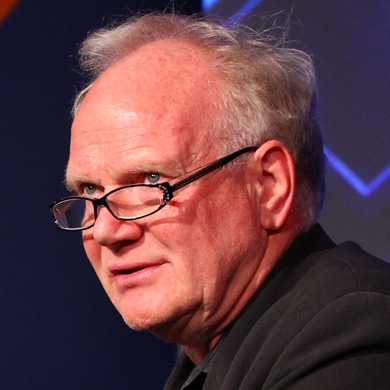
With the concept of “liquid modernity”, Zygmunt Bauman offers a striking diagnosis of contemporary society: our world, he argues, has lost its solid forms. What used to be stable and predictable—work, relationships, life paths—is now flexible, uncertain, and in constant flux. ModernityModernity refers to the social, cultural, political, and economic conditions associated with the development of modern industrial societies. has become liquid: structures dissolve, reference points vanish, and individuals are increasingly left to navigate life on their own. In a world shaped by globalization, technological change, and shifting values, Bauman’s work provides a clear sociological account of life under conditions of permanent uncertainty.
Bauman’s concept of “liquid” modernity describes the shift from stable, institutionally guaranteed life conditions to a society of uncertainty, flexibility, and de-bounding. Social bonds, career paths, and identities are no longer given but must be individually constructed and continually adapted. Liquid modernity demands adaptability—without reliable orientation. It creates freedoms but also new forms of precarity and isolation.
Zygmunt Bauman and Context of Emergence
Zygmunt Bauman (1925–2017) was a Polish-British sociologist and one of the most important social theorists of the 20th and early 21st centuries. He taught for many years at the University of Leeds and became especially known for his works on modernity, the Holocaust, and consumer society. Liquid Modernity appeared in 2000 and marked the start of a series of books in which Bauman examined the “liquidity” of various social spheres—from love to fear to surveillance. His work is strongly influenced by postmodern theories, but remains ethically motivated and politically engaged.
Key Points
Liquid Modernity according to Zygmunt Bauman

Main Proponent: Zygmunt Bauman (1925–2017)
First Publication: 2000 (English)
Country: United Kingdom
Core Idea: Modernity has become “liquid”: social bonds, institutions, and identities are dissolving. Individuals must construct their biographies under uncertain conditions.
Foundation for: Contemporary social diagnosis, consumer criticism, globalization sociology, social theory, exclusion research, sociology of morality.
Core Arguments of the Work
Bauman’s central thesis is that we no longer live in a “solid” modernity, in which institutions, norms, and life plans were relatively stable, but in a “liquid” modernity where everything is in motion. This new form of modernity is characterized by:
- Flexibilization: Employment relationships, social roles, and identities are no longer fixed but must be continually recreated.
- IndividualizationIndividualization refers to social processes through which individuals become increasingly responsible for shaping their own identities, life choices, and biographies.: People bear responsibility for their lives themselves—while societal support diminishes.
- Consumer Orientation: Social belonging is increasingly mediated through consumption rather than class or milieu.
- Uncertainty: In a globally networked world, risks are unmanageable and political agency is limited.
In this situation, “social inequality” is no longer organized through classes but through temporary chances of participation: those who can keep up belong; those who cannot are “liquidated.” ExclusionThe social process of marginalizing individuals or groups, limiting their access to resources, rights, and participation. is no longer a marginal phenomenon but a structural component of the new order.
In liquid modernity, consumption increasingly replaces traditional forms of social integration. Belonging is performatively produced—through brands, lifestyles, and symbolic consumption. Those who can consume are included. Those who cannot are excluded as “wasted lives.” Bauman sees this as a new form of social division in which exclusion operates not only materially but also culturally.
Social exclusion refers to processes that marginalize individuals or groups from key areas of societal participation—such as the labor market, education system, political representation, or social life. It manifests not only in material disadvantage but also in symbolic devaluation, isolation, and loss of social recognition. Exclusion is a relational phenomenon: those who are excluded simultaneously define the boundaries of belonging.
Theoretical Context
Bauman’s concept of liquid modernity builds on the tradition of diagnosing modernity but differs in key respects: While theorists like Ulrich Beck speak of a “reflexive modernity,” Bauman remains skeptical of whether this new freedom is truly emancipatory. In his view, the dissolution of fixed structures does not lead to self-determination but to isolation and moral disorientation.
His work is strongly normative and ethically motivated: Bauman calls for more responsibility, solidarity, and social awareness. His analysis combines sociological theory with moral philosophy—a combination that sets him apart from many of his contemporaries.
Bauman’s work can also be read as a contribution to the sociology of morality: He does not just ask how society functions but what responsibility is possible within it. His analyses aim to heighten ethical awareness for others—and thereby resist purely functionalist sociology.
The following comparison highlights how differently Zygmunt Bauman and Ulrich Beck interpret the transformation of modernity—despite starting from similar diagnoses.
| Aspect | Zygmunt Bauman | Ulrich Beck |
|---|---|---|
| Conceptual Focus | Liquid Modernity | Reflexive Modernity |
| Social Diagnosis | Instability, uncertainty, dissolution of social bonds | Transformation through new risks (e.g. environment, technology) |
| RoleA role is a set of socially expected behaviors and norms linked to a specific social position. of Individualization | Isolation, uprooting, moral disorientation | Opportunity for emancipation and biographical design |
| Evaluation of Modernity | Critical, pessimistic | Ambivalent but potentially emancipatory |
| Role of InstitutionsInstitutions are stable systems of norms, rules, and social practices that organize behavior and structure social life. | Loss of collective orientation, erosion of social security | Transformation of institutions, but not their complete dissolution |
| Normative Orientation | Ethically grounded, call for solidarity | Descriptive-analytical, with cautious optimism |
| Target Perspective | Strengthening responsibility and social awareness | Democratization of decision-making processes and risk awareness |
Reception and Significance
Liquid Modernity has been widely received internationally and is considered an influential contribution to contemporary sociology. Especially in debates on globalization, migration research, and social exclusion, Bauman’s approach is regularly cited. His diagnosis of a precarious, consumption-oriented, self-optimizing society has lost none of its relevance—quite the contrary: In times of digitalization, climate crisis, and multiple uncertainties, the world seems more liquid than ever.
Zygmunt Bauman uses this phrase to describe the paradoxical conditions of liquid modernity: Individuals are increasingly left to manage their lives on their own—yet lack stable institutional frameworks to support them. Whereas previous generations built their biographies within clear social roles and collective safety nets (e.g., welfare state, unions), many today lack that societal backing. The result is uncertain self-realization under precarious conditions.
Example:
Young adults are expected to be flexible, mobile, and entrepreneurial—like in the globalized job market. At the same time, reliable prospects are missing due to temporary contracts, absent social benefits, or lack of political representation. They must manage themselves—without institutional security behind them.
Digital platforms accelerate the fluidity of social relationships: Online identities are easily shaped, discarded, and consumed. Dating apps, social networks, and algorithmically driven markets operate in an economy of the moment, replacing long-term bonds with options. Bauman’s theory gains new relevance—not despite but because of digital transformation.
Conclusion
Zygmunt Bauman’s Liquid Modernity is a powerful attempt to understand the uncertainties and challenges of contemporary life. His diagnosis is not merely a description of social changes but an engaged call to assume responsibility in a world where traditional anchors have become fragile. For sociologists, the work offers an important contribution to understanding modern societies in a globalized world—and an ethical reminder not to lose sight of the consequences of these transformations.
References
- Bauman, Zygmunt (2000): Liquid Modernity. Cambridge: Polity Press.
- Bauman, Zygmunt (2004): Wasted Lives: Modernity and Its Outcasts. Cambridge: Polity Press.
- Dörre, Klaus (2011): Precarity in Times of Plenty? In: Blätter für deutsche und internationale Politik, 5/2011, pp. 43–52.
- Rehberg, Karl-Siegbert (ed.) (2007): Zygmunt Bauman: An Introduction. Hamburg: Junius Verlag.