• Zur Hauptnavigation springen
  • Zum Inhalt springen
  • Zur Fußzeile springen

SozTheo

Sociology & Criminology for a Changing World

  • Sociology
    • Theories
    • Key Works in Sociology
    • Key Concepts in Sociology
  • Criminology
    • Key Works in Criminology
    • Key Concepts in Criminology
  • Theories of Crime
    • Classical and Rational Choice Theories of Crime
    • Biological Theories of Crime
    • Social Structure & Anomie
    • Learning and Career
    • Interactionist & Labeling
    • Critical, Marxist & Conflict Theories
    • Control Theories
    • Cultural & Emotional
    • Space & Surveillance
  • Key Thinkers
  • Glossary
Home » Control theories » Seite 3

Control theories

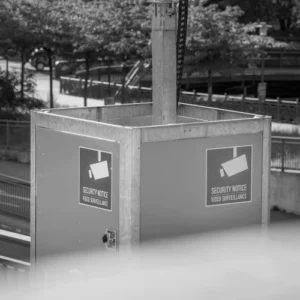
Black-and-white image of a public security box with video surveillance warning signs, symbolizing deterrence, monitoring, and situational crime prevention in rational choice theory.

Classical and Rational Choice Theories of Crime

Classical and Rational Choice Theories Classical and rational choice theories explain crime as the result of purposeful decision-making by individuals who weigh opportunities, risks, rewards, and situational conditions. These approaches assume that people are capable of choosing between lawful and unlawful behavior and that criminal acts emerge within concrete social situations rather than from deterministic

continue …

Titelbild: Toennies-Gemeinschaft-und-Gesellschaft

Ferdinand Tönnies – Community and Society (1887)

Ferdinand Tönnies’ work „Community and Society“ (1887) is considered one of the earliest and most important key texts in sociology. In this work, Tönnies introduces the fundamental distinction between two forms of social life: the traditionally rooted, emotionally bound community and the rationally calculated, purpose-driven society. This differentiation continues to influence sociological analyses of social

continue …

a broken window is an example for an incivility according to Wilson and Kellings broken windows theory

Broken Windows Theory (Wilson & Kelling)

The Broken Windows Theory was developed by James Q. Wilson and George L. Kelling. According to the authors, even minor signs of neglect, like a broken window, should be repaired quickly to prevent further decay, maintain order, and reduce crime. Destruction in urban areas is therefore inextricably linked to crime and causes it. A seemingly

continue …

Age Graded Theory/ Turning Points (Sampson and Laub)

Turning Point Theory, also known as the Age-Graded Life-Course Theory of Crime, was developed by Robert J. Sampson and John H. Laub. This influential approach in developmental criminology argues that criminal behaviour is not static over the life course. Instead, it can change in response to key life events or turning points that strengthen or

continue …

Reintegrative Shaming (Braithwaite)

Crime, Shame and Reintegration (1989) by John Braithwaite is a foundational text in criminology that builds on labelling theory, control theories, and social disorganization theory. Braithwaite’s concept of shaming analyzes the social processes that invoke shame as a form of social control. He distinguishes between two types: disintegrative shaming, which stigmatizes and excludes offenders, and

continue …

Defiance Theory (Sherman)

Lawrence W. Sherman’s Defiance Theory seeks to explain why punishment does not always deter crime. Instead of assuming uniform effects, Sherman argues that sanctions can produce three distinct reactions: Deterrence: Punishment successfully discourages further crime. Irrelevance: Punishment has no effect on future offending. Defiance: Punishment actually intensifies deviant behaviour. Key Points Defiance Theory Main Proponent:

continue …

Seitennummerierung der Beiträge

« Previous 1 2 3 4 5 Next »

Footer

About SozTheo

SozTheo is a personal academic project by Prof. Dr. Christian Wickert.

The content does not reflect the official views or curricula of HSPV NRW.

SozTheo.com offers clear, accessible introductions to sociology and criminology. Covering key theories, classic works, and essential concepts, it is designed for students, educators, and anyone curious about social science and crime. Discover easy-to-understand explanations and critical perspectives on the social world.

Looking for the German version? Visit soztheo.de

Legal

  • Impressum

Explore

  • Sociology
    • Key Works in Sociology
    • Key Concepts in Sociology
  • Criminology
    • Key Works in Criminology
    • Key Concepts in Criminology
  • Theories of Crime
  • Key Thinkers
  • Glossary

Meta

  • Anmelden
  • Feed der Einträge
  • Kommentar-Feed
  • WordPress.org

© 2026 · SozTheo · Admin