• Zur Hauptnavigation springen
  • Zum Inhalt springen
  • Zur Fußzeile springen

SozTheo

Sociology & Criminology for a Changing World

  • Sociology
    • Theories
    • Key Works in Sociology
    • Key Concepts in Sociology
  • Criminology
    • Key Works in Criminology
    • Key Concepts in Criminology
  • Theories of Crime
    • Classical and Rational Choice Theories of Crime
    • Biological Theories of Crime
    • Social Structure & Anomie
    • Learning and Career
    • Interactionist & Labeling
    • Critical, Marxist & Conflict Theories
    • Control Theories
    • Cultural & Emotional
    • Space & Surveillance
  • Key Thinkers
  • Glossary
Home » Control theories » Seite 4

Control theories

Gallows as a symbol for criminological deterrence theories

Deterrence theories

Deterrence theory explains crime as the result of rational decision-making, where individuals weigh the expected costs of punishment against the potential benefits of offending. The central aim of deterrence is to prevent crime by increasing the perceived risks associated with criminal behavior. Key Points Deterrence Theory Main Proponents: Cesare Beccaria, Jeremy Bentham, Franz von Liszt,

continue …

Black-and-white image of a chessboard with pieces arranged mid-game, symbolizing strategic thinking, calculation, and decision-making in rational choice theory.

Rational Choice Theory

Rational Choice Theory explains crime as the result of deliberate, goal-oriented decision-making. Offenders weigh expected benefits against anticipated costs and choose to commit crime when it appears to maximize their personal utility. Key Points Rational Choice Theory Main Proponents: Gary S. Becker, Derek Cornish, Ronald Clarke First Formulations: 1960s–1980s Country of Origin: United States, United

continue …

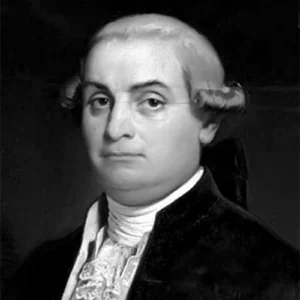
Portrait of Ceasre Beccaria – founding father of criminology

Classical Criminology

Classical criminology explains crime as the result of rational decision-making by free and responsible individuals. The Classical School of Criminology emphasizes deterrence, proportional punishment, and equality before the law as the foundation of modern criminal justice systems. Key Points Classical Criminology Main Proponents: Cesare Beccaria, Jeremy Bentham, John Howard, Samuel Romilly, John Anselm von Feuerbach,

continue …

General Theory of Crime (Gottfredson & Hirschi)

The General Theory of Crime, developed by Michael Gottfredson and Travis Hirschi in 1990, is one of the most influential modern control theories. It offers a parsimonious, universal explanation of criminal behavior by focusing on individual self-control. Rather than asking why people commit crimes, Gottfredson and Hirschi ask why they don’t—arguing that crime is the

continue …

Control Balance Theory (Tittle)

The Control Balance Theory, developed by Charles R. Tittle in the 1990s, is an ambitious attempt to create a general theory of deviance that explains both the likelihood and the type of deviant behavior. Unlike many other control theories that focus only on external social constraints, Tittle’s model emphasizes the dynamic relationship between the control

continue …

Social bonds theory (Hirschi)

Travis Hirschi’s Social Bonds Theory (1969) is one of the most influential control theories in criminology. Rather than asking why people commit crime, Hirschi asks why they conform to rules at all. He argues that human beings have a natural tendency toward deviance, and that conformity results from effective social control rooted in strong social

continue …

Seitennummerierung der Beiträge

« Previous 1 2 3 4 5 Next »

Footer

About SozTheo

SozTheo is a personal academic project by Prof. Dr. Christian Wickert.

The content does not reflect the official views or curricula of HSPV NRW.

SozTheo.com offers clear, accessible introductions to sociology and criminology. Covering key theories, classic works, and essential concepts, it is designed for students, educators, and anyone curious about social science and crime. Discover easy-to-understand explanations and critical perspectives on the social world.

Looking for the German version? Visit soztheo.de

Legal

  • Impressum

Explore

  • Sociology
    • Key Works in Sociology
    • Key Concepts in Sociology
  • Criminology
    • Key Works in Criminology
    • Key Concepts in Criminology
  • Theories of Crime
  • Key Thinkers
  • Glossary

Meta

  • Anmelden
  • Feed der Einträge
  • Kommentar-Feed
  • WordPress.org

© 2026 · SozTheo · Admin