• Zur Hauptnavigation springen
  • Zum Inhalt springen
  • Zur Fußzeile springen

SozTheo

Sociology & Criminology for a Changing World

  • Sociology
    • Theories
    • Key Works in Sociology
    • Key Concepts in Sociology
  • Criminology
    • Key Works in Criminology
    • Key Concepts in Criminology
  • Theories of Crime
    • Classical and Rational Choice Theories of Crime
    • Biological Theories of Crime
    • Social Structure & Anomie
    • Learning and Career
    • Interactionist & Labeling
    • Critical, Marxist & Conflict Theories
    • Control Theories
    • Cultural & Emotional
    • Space & Surveillance
  • Key Thinkers
  • Glossary
Home » Criminology » Seite 10

Criminology

Close-up black-and-white photo of a dictionary page highlighting the word security

Key Concepts in Criminology

Criminology is built on a set of fundamental concepts that provide the analytical tools to understand crime, criminal justice, and social responses to deviance. These key concepts in criminology form the foundation for both theoretical debates and practical applications in law, policing, and policy-making. They allow us to ask not only why crimes occur, but

continue …

Stanley Cohen – Moral Panic

Stanley Cohen – Folk Devils and Moral Panics (1972)

With his work Folk Devils and Moral Panics (1972), Stanley Cohen created a classic of critical criminology and media analysis. Building on the Labelling Approach, he examines how societies, in times of perceived threat, symbolically charge, demonize in the media, and politically combat certain groups. Cohen describes these processes as “moral panics” – collective reactions

continue …

Stack of books in a modern library

Key Works in Criminology

This section presents key works in criminology that go beyond classical theories of crime. The selected texts are theoretically rich, interdisciplinary, and have had a lasting impact on criminological debate. They cover central themes such as social control, criminal law, policing, surveillance, social inequality, and deviant identities. Classics & Foundational Texts in Criminology W. E.

continue …

Tagging Theory (Tannenbaum)

Frank Tannenbaum’s concept of “tagging”, developed in his 1938 work Crime and the Community, is widely regarded as a foundational contribution to labelling theory. Long before Howard Becker or Edwin Lemert formalized the labelling approach, Tannenbaum argued that crime is not simply a quality of the act itself but emerges through social reactions and the

continue …

Black-and-white image of a human brain isolated against a soft background, representing neurobiological processes and the role of brain function in biological theories of crime.

Biological Theories of Crime

Biological theories of crime explain criminal behavior by reference to genetic, neurological, physiological, and evolutionary factors at the level of the individual. They focus on individual predispositions and biological processes that may increase the likelihood of offending. Unlike sociological approaches that emphasize social structures or cultural norms, biological theories examine how processes within the body

continue …

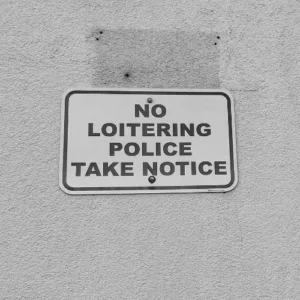
“No loitering” policy sign reflecting informal social control and CPTED principles in urban environments

Crime Prevention Through Environmental Design (CPTED)

Crime Prevention Through Environmental Design (CPTED) is an approach to crime prevention that emphasizes the design and management of built environments to reduce opportunities for crime and increase perceived safety. Rather than focusing primarily on offender rehabilitation or punitive deterrence, CPTED seeks to shape environments in ways that discourage criminal behavior while encouraging legitimate use

continue …

Seitennummerierung der Beiträge

« Previous 1 … 8 9 10 11 12 … 18 Next »

Footer

About SozTheo

SozTheo is a personal academic project by Prof. Dr. Christian Wickert.

The content does not reflect the official views or curricula of HSPV NRW.

SozTheo.com offers clear, accessible introductions to sociology and criminology. Covering key theories, classic works, and essential concepts, it is designed for students, educators, and anyone curious about social science and crime. Discover easy-to-understand explanations and critical perspectives on the social world.

Looking for the German version? Visit soztheo.de

Legal

  • Impressum

Explore

  • Sociology
    • Key Works in Sociology
    • Key Concepts in Sociology
  • Criminology
    • Key Works in Criminology
    • Key Concepts in Criminology
  • Theories of Crime
  • Key Thinkers
  • Glossary

Meta

  • Anmelden
  • Eintrags-Feed
  • Kommentar-Feed
  • WordPress.org

© 2026 · SozTheo · Admin