• Zur Hauptnavigation springen
  • Zum Inhalt springen
  • Zur Fußzeile springen

SozTheo

Sociology & Criminology for a Changing World

  • Sociology
    • Theories
    • Key Works in Sociology
    • Key Concepts in Sociology
  • Criminology
    • Key Works in Criminology
    • Key Concepts in Criminology
  • Theories of Crime
    • Classical and Rational Choice Theories of Crime
    • Biological Theories of Crime
    • Social Structure & Anomie
    • Learning and Career
    • Interactionist & Labeling
    • Critical, Marxist & Conflict Theories
    • Control Theories
    • Cultural & Emotional
    • Space & Surveillance
  • Key Thinkers
  • Glossary
Home » Routine Activity Theory

Routine Activity Theory

Crime Pattern Theory illustration showing a hand placing a pin on a city map, symbolizing spatial crime patterns, hotspot analysis, and environmental criminology.

Crime Pattern Theory (Brantingham & Brantingham)

The Crime Pattern Theory is a central theory within environmental criminology and explains why crime tends to concentrate in specific spatial patterns. Developed by Paul J. Brantingham and Patricia L. Brantingham, the theory argues that criminal events are not randomly distributed across space but are closely connected to the spatial organization of everyday life. People


continue …

Decision making as a central mechanism in Wikstroems Situational Action Theory

Situational Action Theory (SAT) (Wikström)

The Situational Action Theory (SAT) developed by the Swedish criminologist Per-Olof H. Wikström explains criminal behavior as the result of a decision-making process within specific social situations. According to the theory, crime occurs when individuals with a certain crime propensity encounter situations in which rule-breaking is perceived as a possible course of action. At the

continue …

Black-and-white photo of a raised hand symbolizing victims, protection, and resistance

Victimology and Victimisation

Victimology is the scientific study of victims of crime, their experiences, and their interactions with offenders, society, and the criminal justice system. As a subfield of criminology, it emerged in the mid-20th century and has since developed into an independent research tradition. Victimisation, by contrast, refers to the process and experience of becoming a victim.

continue …

Situational Crime Prevention (SCP)

Situational Crime Prevention (SCP) is an evidence-based strategy that reduces crime by altering environmental conditions and increasing the perceived risks for offenders. It shifts the focus from changing offender motivation to managing the situations in which crimes occur. Situational Crime Prevention (SCP) represents a shift in criminological thinking from offender-focused explanations of crime toward a

continue …

Space & Surveillance

Space and Surveillance theories examine how crime is shaped by physical environments, urban structures, neighborhood conditions, and practices of surveillance and social control. Rather than locating the causes of crime solely in individual motivation or pathology, these approaches analyze how spatial organization, environmental design, community structures, and visible disorder influence where and under what conditions

continue …

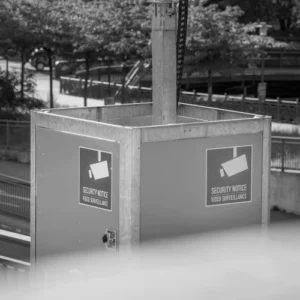
Black-and-white image of a public security box with video surveillance warning signs, symbolizing deterrence, monitoring, and situational crime prevention in rational choice theory.

Classical and Rational Choice Theories of Crime

Classical and Rational Choice Theories Classical and rational choice theories explain crime as the result of purposeful decision-making by individuals who weigh opportunities, risks, rewards, and situational conditions. These approaches assume that people are capable of choosing between lawful and unlawful behavior and that criminal acts emerge within concrete social situations rather than from deterministic

continue …

Seitennummerierung der Beiträge

1 2 Next »

Footer

About SozTheo

SozTheo is a personal academic project by Prof. Dr. Christian Wickert.

The content does not reflect the official views or curricula of HSPV NRW.

SozTheo.com offers clear, accessible introductions to sociology and criminology. Covering key theories, classic works, and essential concepts, it is designed for students, educators, and anyone curious about social science and crime. Discover easy-to-understand explanations and critical perspectives on the social world.

Looking for the German version? Visit soztheo.de

Legal

  • Impressum

Explore

  • Sociology
    • Key Works in Sociology
    • Key Concepts in Sociology
  • Criminology
    • Key Works in Criminology
    • Key Concepts in Criminology
  • Theories of Crime
  • Key Thinkers
  • Glossary

Meta

  • Anmelden
  • Feed der Einträge
  • Kommentar-Feed
  • WordPress.org

© 2026 · SozTheo · Admin