
• Zur Hauptnavigation springen
  • Zum Inhalt springen
  • Zur Fußzeile springen

SozTheo

Sociology & Criminology for a Changing World

  • Sociology
    • Theories
    • Key Works in Sociology
    • Key Concepts in Sociology
  • Criminology
    • Key Works in Criminology
    • Key Concepts in Criminology
  • Theories of Crime
    • Classical and Rational Choice Theories of Crime
    • Biological Theories of Crime
    • Social Structure & Anomie
    • Learning and Career
    • Interactionist & Labeling
    • Critical, Marxist & Conflict Theories
    • Control Theories
    • Cultural & Emotional
    • Space & Surveillance
  • Key Thinkers
  • Glossary
Home » Émile Durkheim

Émile Durkheim

Classical columns representing social structure, order, and stability in functionalist sociology

Functionalism in Sociology: Order, Integration and Social Systems

Functionalism (and its structural-functional variant) understands society as a structured system of functionally interconnected elements that contribute to the maintenance of social order. Institutions, roles, and norms are not primarily explained by individual motives or situational meanings, but by the functions they fulfill for stability, integration, and the coordination of action. At the center lies

continue …

Library books symbolizing classical sociology and the foundations of modern social theory

Classical Sociology: Foundations of Modern Social Theory

Classical sociology establishes the central axes of tension in modern social theory. In response to industrialization, capitalism, political revolution, and secularization, the 19th and early 20th centuries produced different answers to a fundamental question: How is social order possible under the conditions of modernity? Sociology emerges as the science of a society that can no

continue …

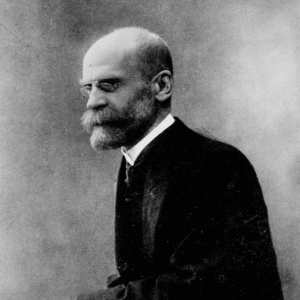
Portrait: Émile Durkheim

Émile Durkheim – The Rules of Sociological Method (1895)

Émile Durkheim’s The Rules of Sociological Method (1895) marks a milestone in establishing sociology as an autonomous, empirical discipline. While earlier approaches were often philosophical or speculative, Durkheim formulated the foundations for systematic research based on observable, verifiable data. The work remains central for understanding the scientific core of sociology and the role of objective

continue …

Anomie theories in Criminology

Social Structure & Anomie

Anomie theories — frequently subsumed under the broader category of strain theories — are concerned with explaining why violations of social norms and deviant behavior exhibit systematic variations across societies and historical periods. These theories examine the relationship between crime and the structural organization of society, positing that deviance emerges as an adaptive response to

continue …

Titelbild: Durkheim - Über soziale Arbeitsteilung

Émile Durkheim – The Division of Labour in Society (1893)

Émile Durkheim (1858–1917) is considered one of the founding figures of modern sociology. In his seminal work The Division of Labour in Society (De la division du travail social, 1893), he examines how social order and cohesion are maintained in complex societies. His central thesis: while traditional societies are held together by mechanical solidarity, modern

continue …

Anomie theory (Merton)

Robert K. Merton’s Anomie Theory expands Émile Durkheim’s concept of anomie by linking deviant behavior to structural inequalities in access to culturally approved goals. First systematically developed in Social Structure and Anomie (1938/1949), the theory explains crime as a socially structured adaptation to blocked opportunities rather than individual pathology. Merton argues that when culturally valued

continue …

Seitennummerierung der Beiträge

1 2 Next »

Footer

About SozTheo

SozTheo is a personal academic project by Prof. Dr. Christian Wickert.

The content does not reflect the official views or curricula of HSPV NRW.

SozTheo.com offers clear, accessible introductions to sociology and criminology. Covering key theories, classic works, and essential concepts, it is designed for students, educators, and anyone curious about social science and crime. Discover easy-to-understand explanations and critical perspectives on the social world.

Looking for the German version? Visit soztheo.de

Legal

  • Impressum

Explore

  • Sociology
    • Key Works in Sociology
    • Key Concepts in Sociology
  • Criminology
    • Key Works in Criminology
    • Key Concepts in Criminology
  • Theories of Crime
  • Key Thinkers
  • Glossary

Meta

  • Anmelden
  • Feed der Einträge
  • Kommentar-Feed
  • WordPress.org

© 2026 · SozTheo · Admin