• Zur Hauptnavigation springen
  • Zum Inhalt springen
  • Zur Fußzeile springen

SozTheo

Sociology & Criminology for a Changing World

  • Sociology
    • Theories
    • Key Works in Sociology
    • Key Concepts in Sociology
  • Criminology
    • Key Works in Criminology
    • Key Concepts in Criminology
  • Theories of Crime
    • Classical and Rational Choice Theories of Crime
    • Biological Theories of Crime
    • Social Structure & Anomie
    • Learning and Career
    • Interactionist & Labeling
    • Critical, Marxist & Conflict Theories
    • Control Theories
    • Cultural & Emotional
    • Space & Surveillance
  • Key Thinkers
  • Glossary
Home » Sociology » Seite 2

Sociology

Classical columns representing social structure, order, and stability in functionalist sociology

Functionalism in Sociology: Order, Integration and Social Systems

Functionalism (and its structural-functional variant) understands society as a structured system of functionally interconnected elements that contribute to the maintenance of social order. Institutions, roles, and norms are not primarily explained by individual motives or situational meanings, but by the functions they fulfill for stability, integration, and the coordination of action. At the center lies


continue …

Library books symbolizing classical sociology and the foundations of modern social theory

Classical Sociology: Foundations of Modern Social Theory

Classical sociology establishes the central axes of tension in modern social theory. In response to industrialization, capitalism, political revolution, and secularization, the 19th and early 20th centuries produced different answers to a fundamental question: How is social order possible under the conditions of modernity? Sociology emerges as the science of a society that can no

continue …

Abstract network of interconnected lines and nodes symbolizing the complexity and interrelation of sociological theories and social structures

Theories

Sociological theories do not primarily differ in their subject matter, but in how they respond to fundamental problems of social order. They address, in different ways, how society is possible, how stability is maintained, how power operates—and what role individuals play within these processes. At the core are recurring axes of tension: Structure vs. agency

continue …

Children’s TV Series as Agents of Socialization – Norms, Role Models, and Social Order

At first glance, children’s television appears harmless: colorful characters, simple narratives, clear conflicts. From a sociological perspective, however, children’s TV series are anything but trivial. They construct model worlds in which children learn what is considered “normal” – which family forms, occupations, conflicts, gender roles, and forms of authority are taken for granted. Children’s series

continue …

Fast Food next to fine cuisine

Sociology of Food

What we eat, when, how, and with whom – these are not purely personal decisions. The sociology of food reveals that eating is a deeply social practice. It signifies belonging, marks differences, reflects power relations, and has become increasingly moralized. Between everyday routines and global food systems, a complex field of research unfolds, offering insights

continue …

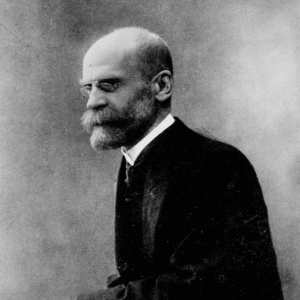
Portrait: Émile Durkheim

Émile Durkheim – The Rules of Sociological Method (1895)

Émile Durkheim’s The Rules of Sociological Method (1895) marks a milestone in establishing sociology as an autonomous, empirical discipline. While earlier approaches were often philosophical or speculative, Durkheim formulated the foundations for systematic research based on observable, verifiable data. The work remains central for understanding the scientific core of sociology and the role of objective

continue …

Seitennummerierung der Beiträge

« Previous 1 2 3 4 … 8 Next »

Footer

About SozTheo

SozTheo is a personal academic project by Prof. Dr. Christian Wickert.

The content does not reflect the official views or curricula of HSPV NRW.

SozTheo.com offers clear, accessible introductions to sociology and criminology. Covering key theories, classic works, and essential concepts, it is designed for students, educators, and anyone curious about social science and crime. Discover easy-to-understand explanations and critical perspectives on the social world.

Looking for the German version? Visit soztheo.de

Legal

  • Impressum

Explore

  • Sociology
    • Key Works in Sociology
    • Key Concepts in Sociology
  • Criminology
    • Key Works in Criminology
    • Key Concepts in Criminology
  • Theories of Crime
  • Key Thinkers
  • Glossary

Meta

  • Anmelden
  • Eintrags-Feed
  • Kommentar-Feed
  • WordPress.org

© 2026 · SozTheo · Admin