Ferdinand Tönnies
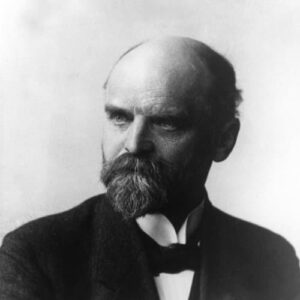
Author Details
- Full Name: Ferdinand Tönnies
- Year of Birth: 1855
- Year of Death: 1936
- Country: Germany
- Discipline: Classical Sociology, Sociology
- Themes:
Community and Society, Social Order, Norms, Authority, Modernization, Sociology of the Group
Additional Information
Ferdinand Tönnies is best known for his distinction between Gemeinschaft (community) and Gesellschaft (society), a foundational sociological concept that captures the transformation of social bonds in the context of modernization. Published in his seminal work Gemeinschaft und Gesellschaft (1887), this dichotomy explores the shift from close-knit, emotionally bound relationships typical of traditional societies to impersonal, goal-oriented associations characteristic of modern industrial societies.
Tönnies’ theory reflects a broader concern with the erosion of traditional values and the growing individualism associated with urbanization and capitalist development. In his view, Gemeinschaft relationships are based on kinship, locality, and shared beliefs, whereas Gesellschaft is driven by rational self-interest, contracts, and social institutions.
Although often classified as a classical sociologist alongside Weber and Durkheim, Tönnies maintained a distinct theoretical orientation rooted in philosophical and normative concerns. He was also among the first to apply statistical and empirical methods to sociological inquiry in Germany, contributing to the discipline’s scientific legitimacy.
As a co-founder and first president of the German Sociological Association (Deutsche Gesellschaft für Soziologie), Tönnies played a crucial institutional role in the development of sociology as an academic field. Despite periods of political marginalization—especially during the Nazi regime—his work experienced renewed interest in the post-war era.
Tönnies’ ideas continue to influence debates on social cohesion, urbanization, and the nature of modernity. His concepts are often revisited in contemporary discussions about social fragmentation, digital communities, and the impact of globalization on social relations.
Key Works
Gemeinschaft und Gesellschaft (1887), Der Staat und die Gesellschaft (1922), Kritik der öffentlichen Meinung (1922)